Custom Covers Made To Your Specifications
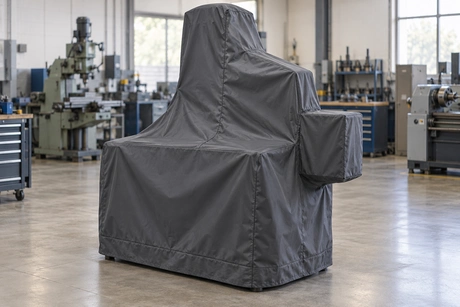
ALCO manufactures machinery and equipment covers that are custom made to precisely align with the size and shape of your asset. We provide covers centered on your measurements, photos, and the specifications you approve for your order.
Whether it is a tall machine, a low pump assembly, or a wide equipment cart, each variation type will need a specific fit. Inform us about handles, hoses, control boxes, and other components that project from the main framework. Add to your specifics where the cover should end and how you intend to overlay and remove it.
Visit our page on custom made covers as you begin with your object’s shape and dimensions. If the shape is unusual, provide a captioned sketch and photos with different angles so all the specifics can be evaluated prior to ordering.
Covers For Machinery, Equipment, And Stored Objects

ALCO provides custom covers for objects of diverse shapes and sizes. Begin with the object you need to cover. Afterwards, inform us on the manner of storage and its location.
- Generators, compressors, welders, and pump assemblies
- Toolboxes, equipment carts, and workshop tools
- Farm machinery, construction equipment, and spare parts
- Pallet stock, storage racks, and shelving
- Medical, electronic, and test equipment in storage
- Trailers, winches, tanks, and other shaped objects
What To Send With Your Quote Request
- The object’s overall length, width, and height, with units marked
- Photos from several sides and a sketch showing changes in shape
- Locations of handles, hoses, cables, and other projections
- Indoor or outdoor use, the storage conditions, and how often you will remove the cover
Match The Cover To How You Use It
Deliberate on the material, tie-downs, and zipper or hook-and-loop openings if needed, and the requirements for your object. Verify the final adjustment, access points, and type of material before placing your order. If the machine has a heated component or shifting parts, review the equipment manufacturer’s guidelines before covering.
Visit our page on custom storage and equipment covers for more instructions on selecting the cover for your storage requirements.
Start With The Object, Not A Stock Size

The model name of a machine can describe the details of what it is. But it does not define all the parts that a cover must encompass. Your machine may include a side tray, or an additional control box later on. ALCO provides custom machinery covers based on your requirements for the equipment and the confirmed specifics for your order.
Give The Shape A Clear Starting Point
Begin by measuring the object in the position when it will be stored. Highlight its entire length, width, and height. Then indicate any part that is set higher, lower, or extends further away than the main body. Apply the same units on every perspective. A basic drawing with detailed notes is more efficient than a clean sketch with missing information.
Provide photos that capture all angles. Include magnified photos for any part that is difficult to see. In your drawing, correspond each caption to the same point in a photo. Indicate the manner of position you want to cover, whether it is a handle that folds or a tray that slides. Kindly refrain from making allowances to the measurements unless instructed by ALCO. Verify details if the numbers refer to the object or the completed cover prior to ordering. Refrain from making measurements out of a catalog photo. A photo may provide details on the shape, but it is not as accurate as the sizes you have personally recorded from your own object.
Three Fit Details Worth Checking
- Include fixed handles, trays, pipes, and cable loops within the size you record.
- Show the bottom edge you want covered. Make clear whether wheels or the base should stay exposed.
- Flag sharp corners and parts that could catch the fabric when you lift the cover.
Plan The Cover Around Your Workday

A custom equipment cover should go beyond complementing the object’s framework. Consider the person who does the covering, the area surrounding the machine, and the frequency of removing it. These aspects assist you to determine which openings and tie-downs are needed as you consult with ALCO prior to order placement.
Picture The First Minute Of Use
Review some of the questions as you assess the use of a cover: In what area will you stand to raise the cover? Are you able to reach the outermost side? Is the object adjacent to a wall or under a shelf? A cover that is easily removed may be appropriate for a certain space. Whereas another may require an opening close to a pipe or handle. Determine the constraints in your photos and discuss which method will be more effective.
Choose Details For A Reason
- Discuss a zipper or hook-and-loop opening when a fixed part blocks removal.
- Ask about tie-downs when the cover needs to stay in place during storage.
- Explain how often you will handle the cover and where it will go once removed.
Illustrate the conditions of the storage as distinctly as the shape. Conditions such as indoor dust, outdoor rain, direct sun exposure, and a damp storage unit prompts diverse questions. Inform ALCO of the primary conditions that concern you and inquire which material and seam fabrication is most appropriate. Avoid assuming that every fabric provides the equivalent protection. A storage cover also incorporates a secure utilization guide. Verify the equipment manufacturer’s guidelines on heat, power, shifting parts, and airflow. Verify removal of the cover when required. Prior to ordering, evaluate the opening locations, fasteners, and lower edge at the same time, so each aspect will serve its function. Mention your budget and primary needs. Consult on how each suggested option modifies the quote, rather than selecting an option because it appears more robust.
Make A Clear Plan For Every Piece Of Equipment

Various equipment located in the same room require different covers. There are diverse shapes for distinct objects such as a tall cart, a low toolbox, or a stepped pump assembly. Label the objects in your request together with the corresponding photos, sketches, and sizes. This will enable an easy assessment for a mixed order.
Keep Similar Machines Separate
A pair of machines may look identical but have distinct handles, bases, or side fittings. Make sure to verify each individual machine rather than replicating the first set of measurements. For similar objects, verify that the objects are indeed the same and confirm the number of covers you need. In case additional orders are later on required, keep the approved details of the same object for reference.
Hypothetical Buying Situation
Assuming a workshop keeps a test cart beside a wall and a backup pump under a rack. The rear cables of the cart remain connected, while the pump has a lifting eye over its central section. The purchaser would document both shapes, mark a cable route, and depict the space over the pump. Review of the fit and removal procedure was needed prior to placing the order for either cover.
Before transmitting your request, consult with the person or people who use the equipment to evaluate the request. Are they able to see every immovable part in the photos? Do the size measurements include those parts? Is the designated storage area clear? Record any detail that needs to be measured rather than making guesses. ALCO’s position is to provide a custom cover according to the approved specifications of your equipment or machinery. A clear overview gives that method a strong start and also provides a helpful record to compare with your quote. Use a dated edition of the drawing and mark the changes in specifications so previous notes do not cause confusion.
Details
- Lead Time - Ships in 10-12 Work Days
- Shipping - Free Shipping on orders over $85
- Vinyl Warranty - 5 Years
- 600D Warranty - 3 Years
Common Questions
Which material should I choose?
If you are deciding between the 18 oz or the 12 oz vinyl materials, consider your environment as a basis for the selection. For normal weather conditions, the 12 oz vinyl is a superb material that is more affordable. If harsh conditions are inevitable, such as heavy snow, torrential rains, and gusty winds, the 18 oz material is the best choice.
What is the most common material?
The most common material that ALCO offers is the 18 oz vinyl cover that makes up 90% of its production. The majority of the customers choose the thicker material even though both are robust and appear identical.
Are they easy to clean?
The answer is yes. Unlike other polyester covers that are similar to canvas, vinyl is a fabric that is incredibly smooth so it can be sanitized effortlessly. Canvas material will enclose and retain mold and stains that are hard to eliminate, in contrast to the ALCO Vinyl custom furniture covers that are sleek and easy to maintain.
How strong are the covers?
The 18 oz vinyl is incredibly resilient and has longer-lasting material. The same fabric that is used as cargo covers of semi trailers. Considering the harsh conditions on the road, the vinyl cover was able to withstand the bad effects and this encouraged the truckers to continue using them. This proves that the 18 oz vinyl is a robust and sturdy cover you can purchase and count on.
My cover will be used indoors. Which material is ideal?
We recommend the 600D material. The fabric is ideal for indoors and even outdoors if the cover will rest in the shade most of the time and not be exposed to adverse environments often.


