

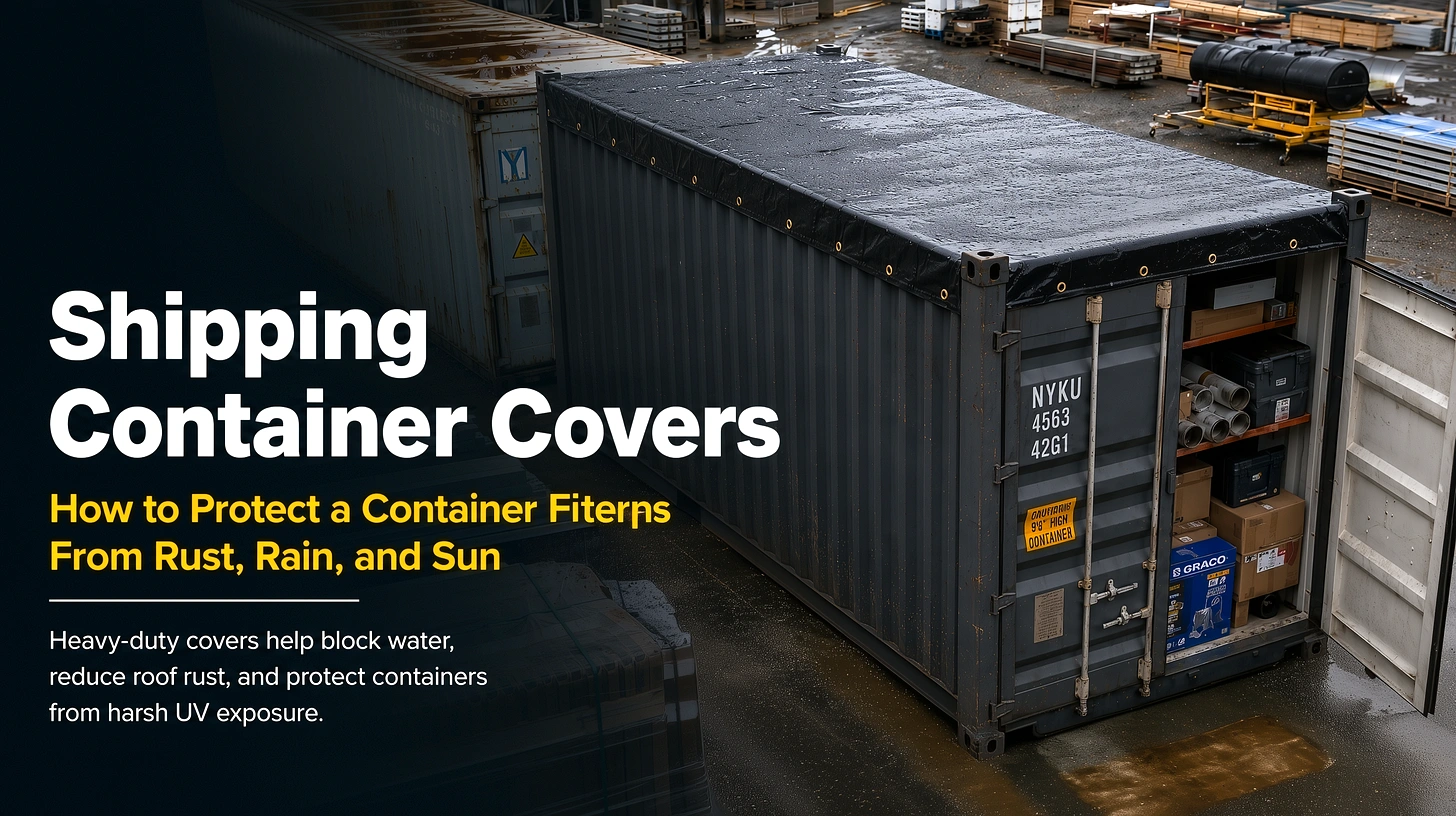
A shipping container looks tough, but its steel skin still rusts, its roof still pools water, and the sun still bakes whatever sits inside. A fitted cover is low-cost insurance that keeps a container and its contents dry and rust-free. This guide explains when you need a shipping container cover, what it protects against, and how to choose one that fits. You can see our custom shipping container covers for sizing and material options.
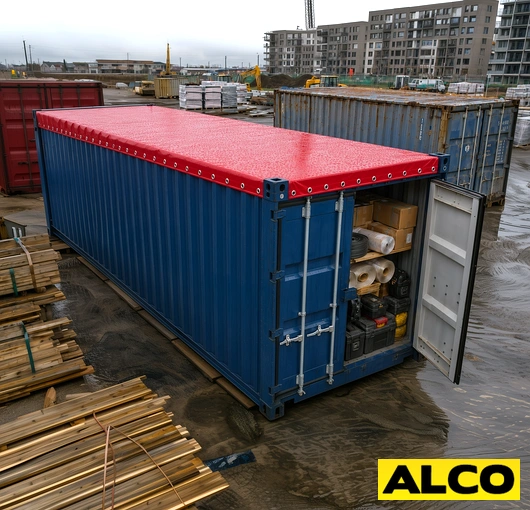
Do You Need a Cover for a Shipping Container?
Yes, if the container lives outdoors. A cover shields the steel roof and doors from standing water, rust, and UV, which are the three things that age a container fastest.
Shipping containers look weatherproof, and when they are new they mostly are. The problem is time. Door gaskets dry out, roof seams work loose, and the first scratch or chip in the paint gives rust a place to start.
The roof is the weak spot. It is nearly flat, so rain and melting snow sit there and pool instead of draining. Standing water plus a small paint chip equals rust, and rust on a steel roof eventually becomes a leak. A fitted shipping container cover keeps that water off the steel in the first place.
Location makes a big difference too. Steel corrodes far faster near the coast or in industrial areas, where salt and pollution speed up the reaction. The American Galvanizers Association publishes atmospheric corrosion rates showing how marine and industrial air eat through zinc and steel much quicker than dry inland air. A cover slows that down by keeping the surface dry.
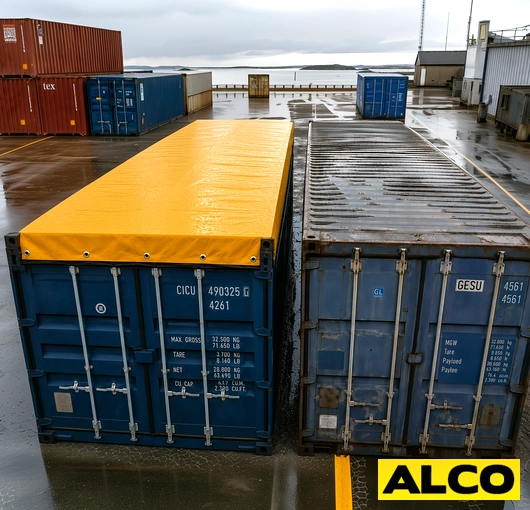
When Should You Use a Shipping Container Cover?
Use one any time a container sits outside for more than a few weeks, already shows roof rust, or stores anything you cannot afford to get wet.
These are the situations where a cover pays for itself fastest:
- Long-term storage in a yard, lot, or back field where the container sits exposed all year.
- On-site storage at construction sites, where tools and materials need to stay dry.
- Older containers that already have roof rust, soft spots, or past leaks.
- Containers holding moisture-sensitive goods like electronics, paper, fabric, or packaged products.
- Harsh climates: heavy snow, frequent rain, strong sun, or salty coastal air.
- Containers you plan to resell, where surface condition affects the price.
The same approach works for roll-off boxes and dumpsters that need to stay dry. For those, see our shipping container tarp covers.
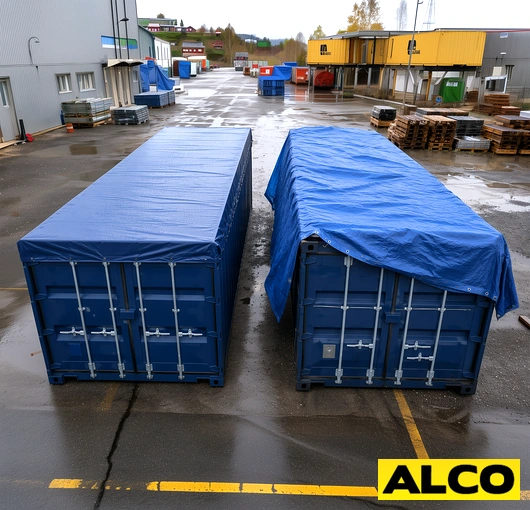
Why Is a Custom Cover Better Than a Generic Tarp?
A custom cover is cut to your container size, so it stays put and sheds water. A loose hardware-store tarp flaps in the wind, traps water in low spots, and tears within a season.
Generic tarps are cheap for a reason. They never fit right, so wind gets under them and works them loose. The low spots collect water instead of draining it, which defeats the whole purpose.
A custom-sized cover is measured to a 20 ft or 40 ft container, or to your exact dimensions. It drapes correctly, ties down at the corners, and uses heavier material that stands up to sun and wind. We design and supply covers to fit, so you are not fighting a tarp that was never meant for the job.
Choosing the Right Shipping Container Cover
Before You Order: Shipping Container Cover Checklist
- ✓ Measure the container length, width, and height (note 20 ft vs 40 ft).
- ✓ Check the roof for existing rust, soft spots, or past leaks.
- ✓ Decide on full-drape coverage or roof-only protection.
- ✓ Pick a material weight that matches your climate and sun exposure.
- ✓ Plan your tie-down points so the cover stays tight in wind.
- ✓ Note whether stored goods need extra ventilation to limit condensation.
- ✓ Send your measurements and photos for a custom-fit quote.
Protect Your Container From Weather and Rust

What Does a Shipping Container Cover Protect Against?
A cover protects against the four things that ruin outdoor containers: rust, leaks, sun damage, and trapped moisture that soaks the goods stored inside.
Rust and Corrosion
Rust is the number one enemy of a steel container. It starts small at scratches, welds, and the roof, then spreads. Once it eats through, you have a leak that is expensive to patch. Keeping the steel dry is the simplest way to slow corrosion.
Water Leaks and Pooling
Flat roofs hold water. That water finds rust spots, seams, and old repairs, then drips onto whatever is stored below. A cover sheds the water off the sides before it can pool or seep in.
Sun, Heat, and Trapped Moisture
Sunlight fades paint, dries out door seals, and turns a closed container into an oven. Heat also drives condensation: warm, damp air inside cools overnight and "rains" back down on your goods. Industry data shows roughly 10% of containerized goods are lost to moisture damage, a problem covered well in this guide to container moisture. A cover lowers the heat swing that drives that cycle.
What Should You Look For in a Shipping Container Cover?
Look for heavy UV-resistant vinyl, reinforced hems, rust-proof grommets, solid tie-downs, and a fit matched to your container size.
Not all covers are equal. A few details separate one that lasts years from one that fails in months:
- Material weight: heavier vinyl resists tearing, sun, and abrasion far better than thin poly tarps.
- UV resistance: the cover should be rated for constant sun so it does not get brittle and crack.
- Reinforced hems and corners: the edges take the most stress from wind, so they need extra layers.
- Rust-proof grommets and straps: these hold the cover down in wind and let you cinch it tight.
- Correct fit: a cover sized to your container drapes and drains the way it should.


How Long Will a Cover Last, and How Do You Care for It?
A quality vinyl cover lasts several years outdoors, and simple care, keeping it tight, clearing debris, and rinsing it now and then, stretches that life even further.
Lifespan depends on material weight, sun exposure, and how well the cover is secured. A loose cover that flaps will wear out fast. A snug one that sheds water cleanly holds up for years.
Care is easy. Keep the tie-downs tight so wind cannot work the cover loose. Clear leaves, snow, and standing water off the top so weight does not strain the seams. Rinse off dirt and salt now and then, especially near the coast, to protect both the cover and the steel underneath.
Frequently Asked Questions About Shipping Container Covers
Do shipping containers really need covers?
What size cover do I need for a 20 ft or 40 ft container?
Will a cover stop my container from rusting?
Can a cover stop condensation inside a shipping container?
What material is best for a shipping container cover?
How do you secure a cover on a shipping container?
Shipping Container Cover Quick Specs

Quick Specs
- Fits standard 20 ft and 40 ft containers, or made to your exact size.
- Built from heavy, UV-resistant vinyl for long outdoor life.
- Reinforced hems and corners handle wind stress where tarps usually fail.
- Rust-proof grommets spaced along the edges for secure tie-downs.
- Roof-only or full-drape styles depending on how much coverage you need.
- Custom colors and sizes available for unusual containers and roll-off boxes.
Shipping Container Covers That Keep Rust and Water Out
Custom Fit
Sized to a 20 ft, 40 ft, or your exact container so it will not flap, sag, or tear loose.
UV Protection
Heavy vinyl blocks the sunlight that fades paint, cracks seals, and overheats the container.
Blocks Rust
Keeps rain and humidity off the steel so corrosion cannot take hold on the roof and doors.
Sheds Water
A fitted cover sheds rain and snow instead of letting it pool on a flat container roof.
Protects Contents
Keeps stored tools, equipment, and inventory dry inside, even during long outdoor storage.
Conclusion
A shipping container is a big investment, and the weather works against it every day it sits outside. Rust on the roof, water pooling on top, sun baking the steel, and condensation soaking the goods inside all add up to repairs and lost inventory.
A custom-fit shipping container cover is the cheapest way to protect that investment. It sheds rain and snow, blocks UV, and keeps the steel dry so rust never gets a foothold. Whether you are protecting a 20 ft box in a storage yard or a 40 ft container full of equipment, the right cover pays for itself the first time it keeps water out.
Need a Cover for Your Shipping Container?
We design and supply custom-sized shipping container covers, shipped to businesses across the United States. From 20 ft and 40 ft containers to roll-off boxes, every cover is built from heavy UV-resistant vinyl and made to fit. Send your measurements and photos for a free quote.
Get Your QuoteContains: BlogPosting + Person + FAQPage + Organization JSON-LD.
Visible in editor only. Do not duplicate or edit manually.
Choose A Style Below
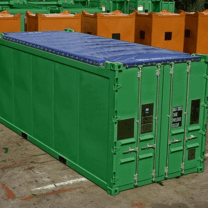
Shipping Container
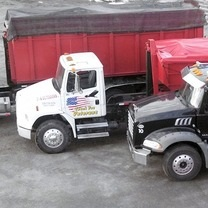
Dumpster Container
About the Author
Scott Fullerton is the Operations Manager at ALCO Covers. With over 15 years of experience in industrial cover and tarp solutions, Scott oversees product development, technical specifications, and digital operations across US and international markets. He helps customers choose the right covers for their equipment, containers, and facilities. Connect with Scott on LinkedIn.