

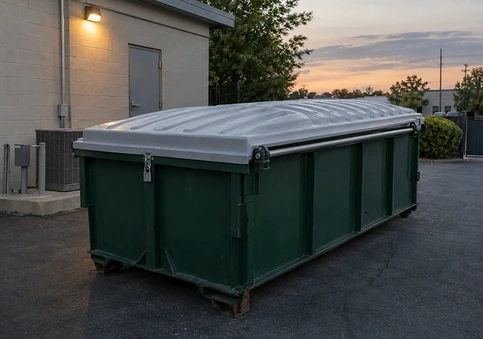
Locking the dumpster is one of the guaranteed ways to stop dumpster divers. Using a locking hard cover locks people out of your container, while the fencing, lighting, signs, and cameras will not allow them to make an attempt. The list below shows seven proven ways that dumpster divers can elevate your business and the best option of ALCO hard cover for your container.
7 Ways To Stop Dumpster Divers

Start practicalizing this list from the top. The first step is the only option that guarantees people will stay out of your container physically. Few people carry out other options because it makes the dumpster a poor target.
Lock Your Dumpster With A Hard Cover

At ALCO, we design our hard covers so you can lock them on your countertop, making it impossible for illegal dumpers or divers to get in. They also keep rain and snow locked out while ensuring you meet EPA stormwater rules. Plus, you don't have to pay to haul water weight at scale again.

Roll Off Dumpster Hardcover
Our lockable polyethylene lids are designed for roll-off containers between 12 and 23 ft. long. They come with a torsion spring, meaning you can open them with little effort.
- From $4,323.99
- Ships in 4 to 5 weeks
- 1-year warranty
- Stays on the container or comes off for hauling

Dumpster Hardcover - Light Duty
This lower-cost lockable lid fits 20, 30, and 40-yard dumpsters. Plus, they lock out rain, snow, and debris.
- $2,639.99
- Ships in 5 to 7 work days
- 5-year warranty, lifetime on hardware
- One size fits 20 to 40 yards

Stand Alone Dumpster Cover
This freestanding lockable cover remains in place when the container is hauled away. You can anchor it to concrete or a counterweight pad.
- From $6,047.99
- Ships in 15 to 20 working days
- 1-year warranty
- Fits a wide range of container sizes
What Dumpster Divers Can Cost You

Your things will hardly remain the same when dumpster divers handle them. You may have to pay for cleanup because torn bags and spilled trash can end up on your lot. When containers are open, people come to dump their own junk, which makes your dumpster fill up in time and makes you pay more for hauling.
- Damaged Property: How much you can care for trespassers is limited. When you see that people are getting in, you need to warn them about invisible hazards.
- Identity Theft: If the lids of the dumpsters are accessible to everyone, they can read the invoices, receipts, and customer files you dispose of. According to the FTC, businesses must take reasonable steps to ensure consumer information is protected when disposing of.
- Sharp Objects and Hazardous Waste: People who handle thrown-away garbage can be injured by loose needles and broken glass (EPA).
Common Questions
Is dumpster diving actually illegal?
No, dumpster diving is not illegal under federal law. In California v. Greenwood (1988), the Supreme Court ruled that trash left out for collection is not private. However, scavenging and going into a fenced, locked, or posted area can still be banned by cities because it’s trespassing.
Can you call the cops on dumpster divers?
Yes, you can call the cops on dumpster divers if you find them on your private property. Divers can be arrested by police when they trespass, especially when your dumpster is locked or has a posted sign (FindLaw). It’s advised that you keep camera footage; it will be helpful when you file a report.
Is dumpster diving unsanitary?
Yes, dumpster diving is unsanitary. This is because dumpsters hold rotten food, broken glass, chemicals, and sometimes loose needles that can poke through garbage bags. This is a threat to the safety of the diver, and it’s also a way of telling you to keep your container away from people.
Why do some people dumpster dive?
Some people dumpster dive because they are looking for food, items they can resell, or scrap metal. Most divers are enticed by restaurants, grocery stores, and people who move out of apartments. However, divers will have no reason to check if you donate surplus food and goods or ensure your dumpster is locked.
Get Started Now
Related Products

Roll Off Dumpster Covers

Ribbed Dumpster Tarps

